
Philippa Kempson
Credentials
Humanitarian Cause
Emergency Response, Rescue in Emergency Situations, Search and Rescue Operation, Forced Displacement, Supporting Refugees
Impact Location
Greece
Occupation
Activist / Refugee Activist
Joined Aurora Network
2016
Photo Gallery
About
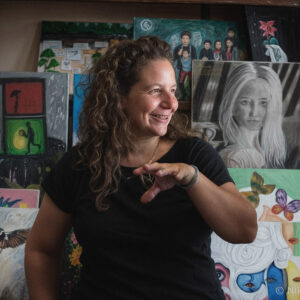
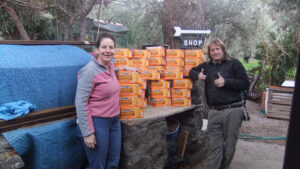
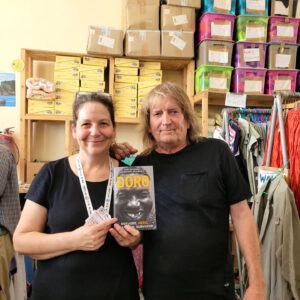
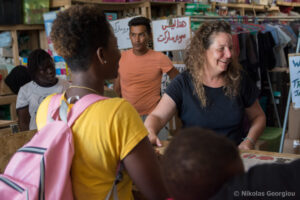
Philippa Kempson is a humanitarian activist known for her dedication to supporting refugees in Greece during one of the world’s most significant migration crises. As co-founder of the Hope Project, a charitable organization she leads alongside her husband, Eric Kempson, Philippa has spent more than a decade supporting people on the move arriving on the Greek island of Lesvos. What began as an emergency response providing food, clothing, and other basic necessities has gradually evolved into a community-based project focused on empowerment, dignity, creativity, and community-building.
Born in 1971 in Wales, United Kingdom, Philippa’s path into humanitarian work was far from straightforward. Initially trained in social work, she explored various fields and places. She spent three months in the United States working as a nanny before returning to the UK and building a career in hospitality and retail management. These experiences broadened her understanding of different cultures and developed the people skills that would later prove invaluable in her humanitarian work. In 2000, Philippa moved to Greece with her husband and their infant daughter, where she initially worked in the restaurant industry before establishing a retail business in 2006. The business showcased handcrafted artwork and sculptures created by her husband, reflecting the couple’s long-standing connection to art and creativity.
Philippa’s life changed profoundly in 2014, when the refugee crisis brought thousands of displaced people to the shores of Lesvos. Confronted with the reality of families arriving by boat in desperate conditions, she opened her home to offer safety, food, dry clothes, and basic support. Together with her family, she worked tirelessly to respond to the urgent needs of those arriving in distress. What began as a deeply personal act of solidarity was formally established in 2016 with the founding of the Hope Project, which received official charitable status in 2021.
Over time, the Hope Project has evolved far beyond emergency aid distribution. It has become a community-centered space grounded in the principles of equity, inclusion, dignity, and empowerment. Today, the project focuses on creating a safe and welcoming environment where people on the move can find support not only from the Hope team, but also from each other. At its heart is the belief that community matters, that even in uncertainty, people deserve spaces where they can connect, share skills, support each other, and begin to rebuild a sense of purpose and belonging.
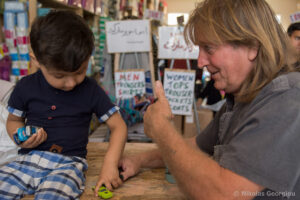
A central part of this work now includes art and creative projects, allowing people to share their stories, process experiences, learn skills, and connect. Through art, workshops and shared spaces, the Hope Project fosters community and confidence, promoting participation over dependency. The focus has shifted from just providing aid to creating a dignified space where voices are heard, and people can contribute, create, and support one another.
“We met incredible people with big hearts and made many friends. Many of them were Syrians and Afghans. Meeting them all made us realize how little we knew about these people.”
Philippa’s years on Lesvos exposed her to the harsh realities of the refugee crisis, including witnessing tragedies firsthand. One of the most significant days for Philippa and her family was October 28, 2015, when a boat carrying hundreds of refugees capsized near their home. Philippa, Eric, and their daughter Elleni risked their own safety to help rescue people from the water. Despite their efforts, the day was marked by profound loss. Experiences like this shaped Philippa’s determination to continue her work and advocate for safer and more humane policies for people seeking refuge.
Philippa’s advocacy extends beyond her on-the-ground work. She and her family have faced local and online hostility for supporting refugees, yet she remains committed to sharing their realities and advocating for policies that uphold human rights, dignity, and safe asylum pathways.
Today, Philippa continues her work through the Hope Project, focusing on community building, creative expression, peer support, and creating a safe space where people on the move are treated with dignity, respect, and equality. For her, the work has never been just about aid, it is about community, humanity, solidarity, and standing alongside people during one of the most difficult journeys of their lives.
The information on this page was last updated on 28/04/2026 and was provided by the Luminary.

